


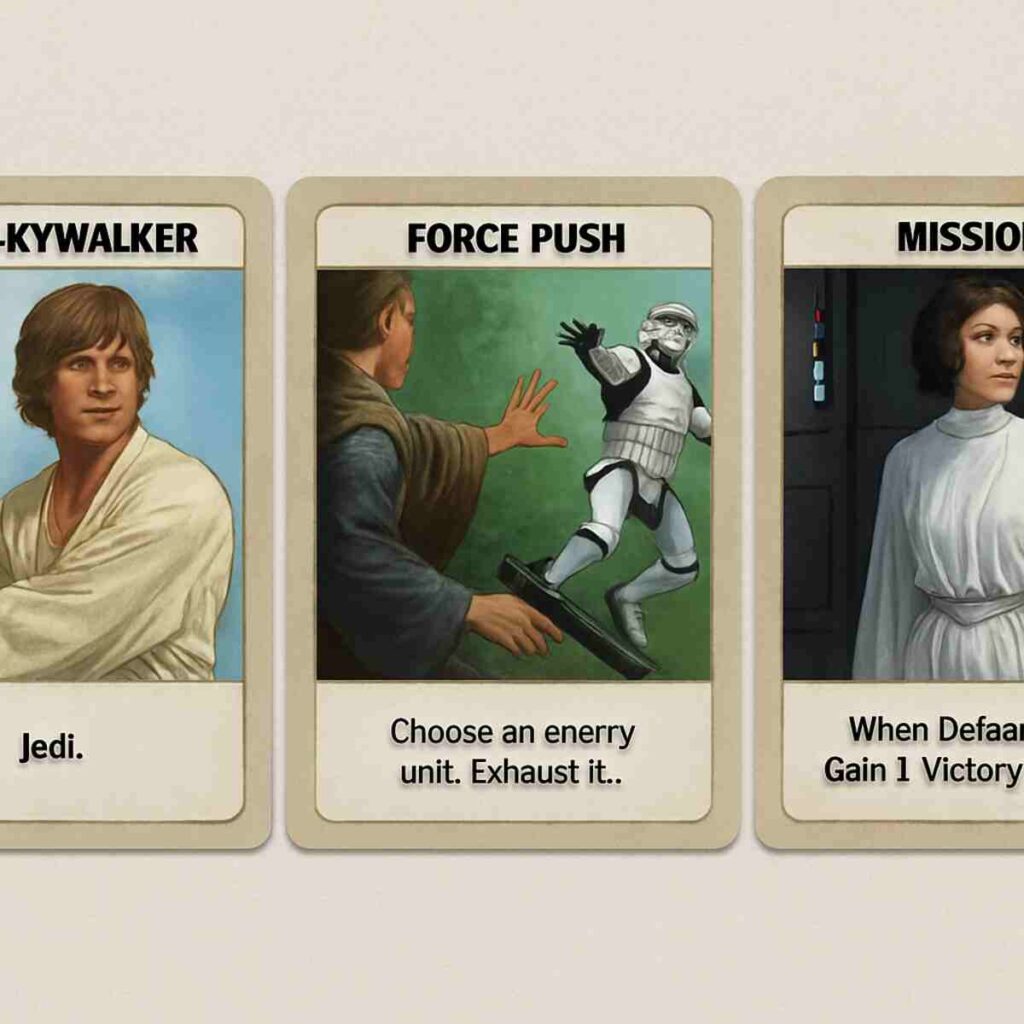
Looking for a new Star Wars activity for your family that doesn’t involve a screen? The Young Jedi card game might be the perfect answer, designed for quick, epic battles right on your kitchen table. But stepping into a new card game can feel like trying to navigate an asteroid field, right? Don’t worry—this guide is your co-pilot, and we promise a smooth ride with no confusing jargon allowed. Get the Best information about riauterdepan.com.
Unlike many collectible card games that seem to require hours of study, this game was built with accessibility in mind. This guide is designed to give you the confidence to open the box and start playing your first game in under 10 minutes. You don’t need any prior card game experience to lead your favorite heroes to victory.
We’ll start with the single most important question: how do you win the game? From there, we’ll introduce the main tools of the trade—your Character and Event cards—and show you how they bring the galaxy’s greatest heroes and villains to life on the tabletop.
You’ll have a clear plan for your first game and know exactly what you need to buy to get started, making this one of the most approachable Star Wars games for kids and families available. The Force is with you, and your first adventure is just a few card flips away. Let’s begin.
What Is the Young Jedi CCG? (And Why It’s Not Like Other Star Wars Card Games)
If you’ve ever glanced at a trading card game and felt overwhelmed by all the rules, you’re not alone. Back in the late 90s, the company behind the official Star Wars games, a publisher named Decipher, noticed this too. They already had a hugely popular (and very complex) title, the Star Wars Customizable Card Game, but they wanted to create something that anyone could pick up and play in minutes, without needing a degree in galactic strategy.
Their solution was the Young Jedi Collectible Card Game. It was intentionally designed from the ground up to be faster, simpler, and more focused on the action of the prequel trilogy. Think of it less like a complex war simulation and more like a quick, exciting lightsaber duel played out with cards on your kitchen table. The entire experience was built to welcome newcomers into the world of card games, not to intimidate them.
So, how do you actually win? Forget about tracking complicated life points or managing a huge battlefield. In Young Jedi, the goal is refreshingly straightforward: you just need to be the first player to complete three Mission cards. These missions represent key moments from the films, like “Rescue the Queen” or “Duel of the Fates.” It’s a clear and simple race to victory, making every game a tense and fast-paced adventure.
This simple objective is what truly sets Young Jedi apart from its more demanding older sibling. While both games came from Decipher and shared a Star Wars theme, Young Jedi was built for quick fun, not long-term strategic mastery, making it perfect for families or anyone new to this type of game. To achieve those missions, you’ll use a handful of straightforward cards that bring the galaxy to life.
The Three Card Types That Run the Galaxy
So, you know your goal is to complete three Missions. But what tools do you use to get there? Everything you’ll do in Young Jedi comes down to three simple card types that work together to create an exciting Star Wars adventure right on your tabletop. Once you can spot these three, you’ll have all the knowledge you need for understanding card abilities and powers in your first game.
The most important cards in your deck are your Character cards. Think of these as your personal squad of heroes and villains. Whether it’s Obi-Wan Kenobi or a Battle Droid, each character has two key numbers you’ll want to look at first: Attack and Health. Just like in a video game, Attack is how much damage the character can deal, and Health is how much damage they can take before being defeated. For your first few games, these are the only numbers that truly matter.
Next up are Event cards. These are your secret weapons and surprise moves. An Event card represents a one-time action, like a well-timed “Force Push” to disrupt your opponent’s plans or a “Sudden Attack” to gain an advantage. They add a layer of cinematic action to the game, allowing you to create those memorable moments from the films when a single clever action turns the tide of a battle.
Finally, you have the Mission cards, which you already know are the key to victory. While these cards are your primary objectives, the most important thing to remember is that you don’t need to memorize every word on them. Simply by playing your Character cards and using your Events wisely, you’ll naturally work toward completing them. With these three card types in hand, you’re ready to see how they all come together in a single, action-packed turn.
A Step-by-Step Guide to Your Very First Turn
Now that you can spot the difference between a Character, an Event, and a Mission, it’s time to see how they all come together. If you’ve ever worried that card games are too complicated, you can relax. A turn in Young Jedi is fast, intuitive, and follows a simple three-part rhythm from start to finish.
The action in the game is powered by a resource called Force Points. Think of these as the energy you get at the start of your turn to make things happen. You’ll spend these points to play Character and Event cards from your hand. As you might guess, a powerful hero in your Light Side deck like Obi-Wan Kenobi will cost more Force Points to play than a simple squad of Clone Troopers.
So, what does that look like in practice? The Young Jedi CCG rules for beginners are designed to be straightforward, and every turn follows the same three simple steps:
- Get Your Force Points. You automatically gain your energy for the turn.
- Play a Card. Spend your Force Points to deploy a Character or use an Event from your hand.
- Take an Action. Choose one of your characters on the table and either attack an opponent’s character or use them to make progress on one of your Missions.
Putting it all together, a basic turn is incredibly quick. For example, you could get 4 Force Points, spend 3 to play a Wookiee Warrior, and then use that Wookiee to attack an enemy Battle Droid. That’s it! This simple flow of gaining energy, playing a card, and taking one key action is the heart of the entire game. Now that you know the fundamentals of how to play, you’re ready for the most exciting first step: choosing your side.
What to Buy First: Your Guide to Starter Decks and Booster Packs
Walking into the game aisle, you’ll likely see two types of products for Young Jedi: larger boxes called Starter Decks and small foil packs called Booster Packs. The difference is simple but crucial. A Starter Deck is like a complete board game in a box; it contains a ready-to-play deck and a rulebook, giving you everything you need to start a game the moment you open it. In contrast, a Booster Pack is a small, randomized assortment of extra cards to add to your collection later. Buying only a booster pack is like buying a handful of random chess pieces—you can’t play a full game with just those.
For your very first purchase, the choice is clear. Look for the Menace of Darth Maul Two-Player Game. This is the best Young Jedi starter deck product because it’s designed specifically for beginners. Inside, you’ll find two complete, pre-built decks—one for the Light Side and one for the Dark Side—along with tokens and a guide to get you started. It contains everything you and a friend need to sit down and play your first match immediately, without any guesswork.
So, what about those shiny little foil packs? Once you’ve played a few games and are ready to discover new characters and abilities, that’s when you’ll want to look for Booster Packs. You can find them right next to the starters, and they are the best way to find rare and powerful Menace of Darth Maul expansion cards to personalize your favorite deck. They are the exciting next step for when you’re ready to move beyond the basics and start building a collection that is uniquely yours.
Customize Your Force: A Simple Guide to Your First Deck Build
After you’ve played a few games with the starter decks, the real fun begins. You open your first booster pack and pull a powerful new card—maybe a legendary Jedi Master or a fearsome Sith Lord. So, what do you do with it? This is where you get to personalize your deck and put your own signature on the game. Think of your pre-built deck as a standard-issue starship; now you get to be the mechanic who installs the upgrades.
The simplest way to start this deck-building guide is with a one-for-one swap. To keep your deck playable, it needs to have the same number of cards you started with. So, when you want to add a new card you love, you first have to choose one to take out. A great strategy is to identify a weaker or more generic card in your deck and replace it with the exciting new one you found. This small change can have a big impact on your game.
For example, let’s look at the Light Side starter deck. It probably includes a few standard “Jedi Padawan” character cards. They’re useful, but not a huge threat. If you open a booster and find a Qui-Gon Jinn card, you’ve found a perfect upgrade. You can simply take one of the Padawan cards out of your deck and put Qui-Gon Jinn in its place. Now, your team has a much stronger champion to send into battle.
The same idea applies to your Dark Side deck build. That deck comes with plenty of basic “Battle Droid” cards. If you’re lucky enough to find the fearsome Darth Maul in a pack, the choice is easy. Swap out one of those droids for the Sith apprentice himself. Your opponent will now have to deal with a much deadlier foe, giving you a clear advantage and making your deck feel more threatening and unique.
This simple act of swapping cards is the heart of deck customization in the Young Jedi card game. As you collect more cards, you’ll learn how their unique instructions can unleash even more power.
Unleash Your Power: Decoding Special Card Abilities
Powerful characters like Qui-Gon Jinn and Darth Maul do more than just hit hard. If you look closely at their cards, you’ll notice a box of text below their picture. This isn’t just flavor from the movies; it’s a set of special instructions that can completely change the flow of a battle. Understanding what these abilities do is the first step to moving beyond basic attacks and playing like a true strategist. These unique powers are where the most exciting, cinematic moments in the Young Jedi card game come from.
Let’s look at a defensive example. Imagine your opponent is about to attack your hero, who is low on health. If you have another character on the table with the Block ability, they act like a dedicated bodyguard. Your opponent is forced to attack the character with Block first, leaving your more important hero safe for another turn. An ability like this isn’t about raw power, but about control and protection, allowing you to shield your key players at just the right moment.
What about on offence? Sometimes the best defense is disrupting your opponent’s plan entirely. Picture this: your rival spends all their Force Points to summon a huge, intimidating character. It’s your turn, and you draw an Event card called Force Push. By playing this card, you can target that brand-new threat and send it straight back to your opponent’s hand! They’ll have to wait and spend all those Force Points again to replay it, giving you a massive advantage and precious time to prepare your own counter-attack.
These special abilities transform the game from a simple back-and-forth into a dynamic puzzle of timing and tactics. Knowing when to use a Block to save a hero or when to unleash a Force Push to stall a major threat is what separates a Padawan from a Master. As you discover more cards with these incredible powers, you might start to see them as more than just game pieces, but as prized parts of a growing collection.
From Play to Display: Is the Young Jedi Game Worth Collecting?
As you start to gather more cards, you might notice that some just feel more special than others. Beyond the exciting abilities, there’s another layer to the game: collecting. Like with classic baseball cards or comic books, some Young Jedi cards are much harder to find than others, which can make them highly sought after by players and fans. So, is the Young Jedi game worth collecting? The answer is a resounding yes, especially once you learn how to spot a treasure in a stack of ordinary cards.
To figure out if a card is rare, you don’t need any special equipment—just look at the tiny symbol printed near the card’s number in the bottom corner. A circle means the card is Common, and a square means it’s Uncommon. These make up the bulk of any collection. The real excitement begins when you see a star, which marks a Rare card. But the ultimate prize is a card with a special, holographic star symbol. These are Ultra-Rares, featuring stunning foil artwork that glimmers in the light and representing the most powerful and iconic characters in the galaxy.
Take, for instance, the Ultra-Rare Darth Maul from the “Menace of Darth Maul” set. Finding one of these in a booster pack is a major event. It’s not just that the card is statistically scarce; it’s a perfect storm of collectibility. The card features one of the most popular villains, its holographic art is incredible, and its in-game abilities are powerful enough to dominate a match. This combination of rarity, character appeal, and gameplay strength makes it one of the most talked-about cards in the game and a definitive answer to “what is the rarest Young Jedi card?”
So how do you find out what a card is actually worth? The best way to check the Young Jedi card list and values is to use online marketplaces like eBay. Search for the card’s name and its set number (e.g., “Darth Maul 1/110”). The key is to look at what the card has actually sold for recently, not just the prices people are asking. This gives you a real-world snapshot of its market value. Whether you’re looking to complete a full set or just hoping to find a few valuable gems, understanding card rarity adds a thrilling new dimension to your journey.
From Youngling to Jedi Knight: Your Next Steps in the Galaxy
Just a short while ago, the world of collectible card games may have seemed as vast and complex as the Outer Rim. But now, the core of the Young Jedi card game is no longer a mystery. You’ve moved beyond simply being a Star Wars fan to understanding how to command your favorite characters in a battle of your own.
Your journey to the game table is simpler than you think. The single best way to begin is by picking up a Two-Player Starter Set. It’s designed specifically for this moment, giving you and a friend everything you need to start playing right out of the box, with no complicated deck-building required for that initial game.
For your first duel, don’t worry about special abilities or advanced rules. Just focus on the basics you learned: use your Force Points, play your characters, and compare their Attack and Health stats. Once you feel the flow of the game, you can begin exploring simple strategies for Young Jedi by swapping a card or two from a booster pack to see how it changes your deck. This is how you begin playing on your own terms.
Ultimately, remember that every card you play is a new line in your own Star Wars story. The goal isn’t to master a complex system, but to have fun creating epic moments on your tabletop. The Force is with you. Now, go have your first duel.