

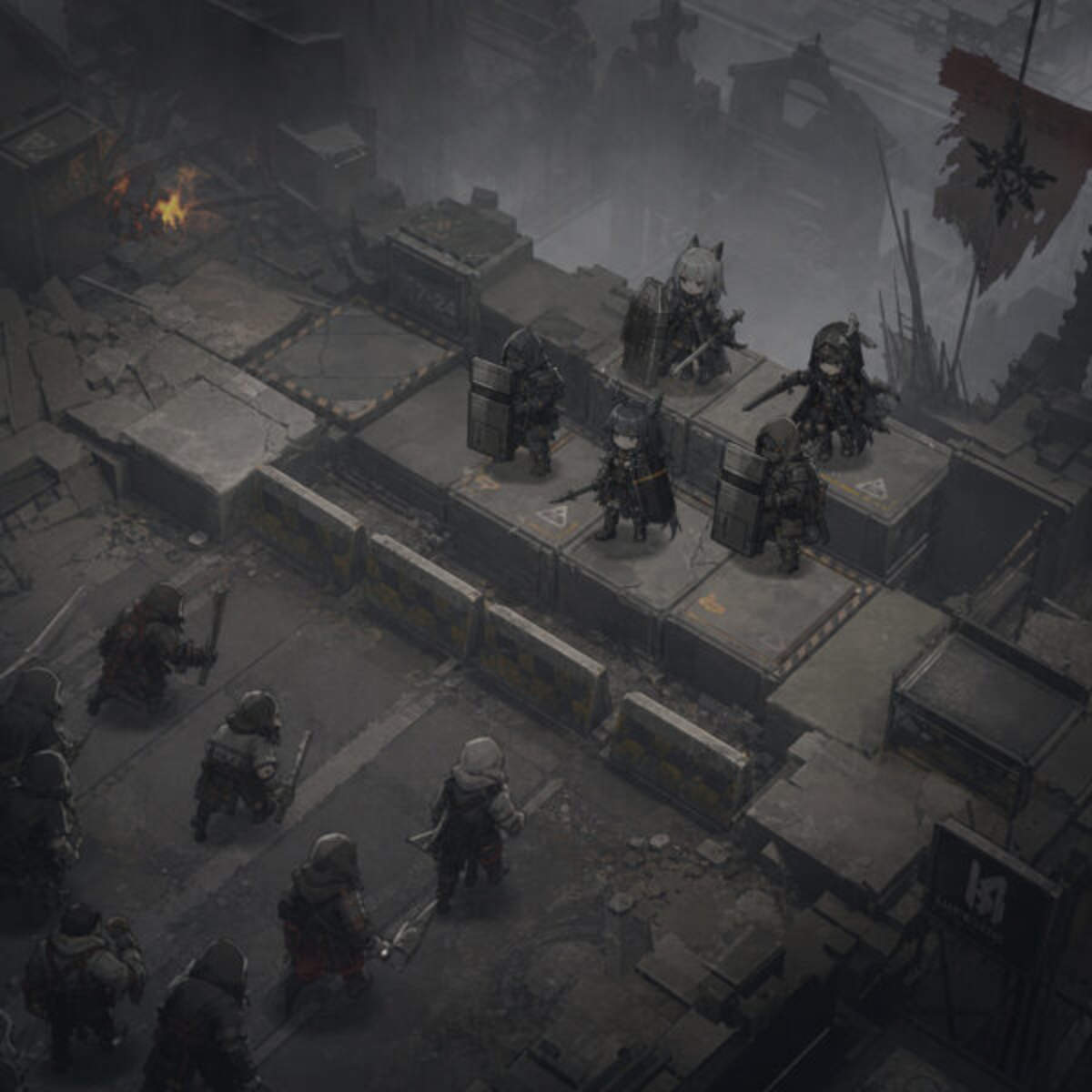
Defenders in Arknights are more than high-DEF walls. The best Defender operators hold dangerous lanes, reduce squad pressure, buy time for burst windows, and sometimes replace a Medic, Guard, or ranged DPS slot entirely. This guide breaks down the strongest Defender Arknights picks by practical role, so you can decide who deserves your materials, modules, and mastery investment. Learn the best info about sakura189.live.
Which Defender should you build first?
If you want the safest first answer, build a healing Defender such as Saria or Shu if you have one, because they protect the frontline while also stabilizing nearby allies. If your account already has enough healing, prioritize a self-sufficient laneholder like Mudrock or Penance, or a damage-focused Defender like Horn who contributes before enemies even reach your block line. For lower-rarity accounts, Cuora and Gummy remain practical early-to-midgame choices because they solve the two basic Defender jobs: surviving pressure and keeping a lane steady.
In current broad Defender rankings, the highest-rated names commonly include Shu, Horn, Mudrock, Penance, Saria, Hoshiguma, Jessica the Liberated, Nian, and newer server-dependent picks such as Hoshiguma the Breacher and Yu. Treat tier lists as a starting point rather than a commandment: Arknights maps reward the right tool, not simply the rarest unit. A Defender who fits your roster’s weakness will often outperform a theoretically stronger operator sitting in the wrong lane.
What makes an Arknights Defender valuable?
A strong Arknights Defender gives you control. That control can come from raw bulk, healing, self-sustain, enemy blocking, ranged splash damage, SP support, Shelter, Sanctuary, barriers, dodge, taunt tools, or simple low-maintenance reliability. The class is traditionally associated with high HP and DEF, and Defenders are generally used to hold chokepoints while the rest of the squad handles damage, healing, or control.
The mistake newer Doctors often make is evaluating every defender arknights option as if all of them do the same job. They do not. Saria and Shu are not competing with Horn in a clean one-to-one way. Mudrock and Penance both belong to the “stand alone and don’t die” category, but they scale differently with enemy flow, skill timing, and incoming damage. Hoshiguma and Nian are classic defensive anchors, while Jessica the Liberated adds flexible shield placement and direction control.
A practical evaluation should ask five questions:
- Can this Defender survive the lane I need covered? Raw DEF matters against physical enemies, but damage reduction, shields, dodge, RES, healing, and invulnerability windows may matter more on specific maps.
- Does this Defender reduce pressure on other squad slots? A Guardian Defender who heals may let you bring one less Medic. A Fortress Defender may let you delay or skip a ranged DPS unit for one lane.
- Does this Defender work without constant attention? Auto-trigger or passive skills are excellent for farming and blind clears. Manual skills are stronger when you know the threat wave is approaching.
- Does this Defender scale into harder content? Endgame stages often punish pure blocking. The best picks usually add damage, healing, crowd control, SP support, or unique mechanics.
- Can your current account actually support the operator? High-rarity units need expensive promotions, masteries, and sometimes modules. A built 4-star can be more useful today than an unbuilt 6-star waiting on materials.
The top-tier Defender operators for most accounts
The following operators are the strongest general recommendations when discussing the arknights best defender choices. They are not ranked only by rarity. They are ranked by how often they solve real maps, how many teams they fit, and how much value they add beyond “has three block.”
Shu
Shu is one of the most valuable modern Guardian Defenders because she combines frontline healing with persistent tile-based sustain and team support. Her talent can sow tiles when she heals, creating areas that restore HP over time and provide Sanctuary, and those sown tiles remain until Shu leaves the map. Her additional team effects can also reward varied class deployment and, in Sui-focused squads, provide broader offensive and SP support.
In practice, Shu is excellent when you want a Defender who quietly makes the entire formation harder to break down. She is not just patching up the operator directly in front of her. She can improve a cluster of important tiles, giving your team more breathing room against chip damage, ranged pressure, and prolonged waves. That matters in Arknights because many failed runs are not caused by a single tank dying instantly; they are caused by several operators gradually falling behind.
Build Shu if you want a premium defensive support unit who fits stable clears, high-pressure lanes, and teams that benefit from sustained healing. She is especially appealing for Doctors who like compact formations around key chokepoints. If you already use Saria, Shu may feel familiar in broad purpose, but her tile effects and squad support give her a distinct identity.
Saria
Saria remains one of the defining Defender operators in Arknights because her kit is useful in an enormous range of content. She heals nearby allies, tanks well, and can support skill cycling by restoring SP when she heals after Elite 2. Her third skill, Calcification, heals allies in a large area while increasing Arts damage taken by nearby enemies and slowing them, making her valuable in both survival and burst-damage setups.
What makes Saria so efficient is role compression. She can function as a lane anchor, emergency healer, SP support piece, and Arts burst enabler depending on the skill you bring. That flexibility is why many veteran accounts still use her long after they have flashier options. A normal Defender asks the rest of your team to do the work; Saria actively helps them do it better.
For new and midgame players, Saria is often one of the best investments in the entire Defender class. Skill 1 is comfortable for single-target sustain, Skill 2 can support multiple nearby allies, and Skill 3 becomes more important when your account has strong Arts damage dealers. If you are trying to decide between several 6-star upgrades, Saria is the kind of operator who rarely feels wasted.
Mudrock
Mudrock is a Juggernaut Defender built for independent laneholding. She cannot be healed by normal direct healing in the same way standard operators can, but she compensates with powerful shields, self-sustain, strong defensive tools, and high-impact skills. The current operator listing identifies her as a 6-star Juggernaut Defender, and her later updates include module support that further develops her branch identity.
Mudrock’s appeal is simple: place her in a hostile lane and let her solve it with minimal babysitting. She is excellent against steady physical pressure, mixed waves that feed her skill cycles, and lanes where deploying a Medic would be awkward or inefficient. Unlike a pure tank, she also contributes meaningful damage, especially when enemies are actually engaging her.
The main caution is cost and timing. Juggernaut-style Defenders can be expensive to deploy, and they may feel clunky if you need immediate early blocking before your DP engine is online. Mudrock rewards planning: open with Vanguards, identify the lane that needs a long-term anchor, then drop her where she can absorb pressure for the rest of the map. If your squad lacks self-sufficient solo holders, she is one of the best answers.
Penance
Penance is another elite Juggernaut-style Defender, but she plays differently from Mudrock. Her identity revolves around barrier generation, punishing enemies that hit her, and ramping into a frighteningly durable laneholder once she gets going. Her overview notes that her Guardian of the Law talent can potentially make her one of the most durable operators when combined with her skills, while also pointing out that her high DP cost makes early deployment and redeployment less convenient.
Penance performs best when a lane sends enough enemies into her to build and maintain momentum. She enjoys being attacked, because that pressure fuels the value of her defensive and retaliatory mechanics. Against the right lane, she can feel almost unfair: enemies crash into her, fail to break through, and take punishment for trying.
She is less plug-and-play than some players expect. If a lane has too few enemies, too much downtime, or burst patterns that arrive before she is ready, she may need support or careful timing. That does not make her weak. It simply means Penance is at her best when you read the map and give her the kind of fight her kit wants.
Horn
Horn is one of the best examples of why the Defender class is not limited to standing still and absorbing damage. As a Fortress Defender, she brings long-range splash pressure, strong skill damage, and team utility. Her talent can buff the ATK of all Defenders while she is deployed, and her Bloodbath talent lets her survive lethal damage once per deployment with a major follow-up state, though with a max HP tradeoff.
Horn’s biggest advantage is that she contributes before enemies reach your frontline. On maps with lanes that approach from predictable directions, she can shell enemy groups, soften elites, reveal invisible enemies with the appropriate skill interaction, and reduce the burden on your Guards and Snipers. She is a Defender who often plays like artillery.
Build Horn if your account already has basic healing and blocking covered, and you want a Defender who improves your offensive reach. She is especially strong when placed safely behind or beside the main line, firing into the enemy’s path. The trade-off is that she is not the default answer when you need only one operator to stand at the mouth of a lane and absorb everything.
Hoshiguma
Hoshiguma is the classic answer to “I need this tile to not collapse.” She is a Protector Defender with excellent defensive identity, a chance to resist incoming damage at Elite 2, and a Defender DEF buff while deployed. Her Tactical Armor can resist damage, and her Special Operation Strategy increases allied Defender DEF, giving her value in Defender-heavy formations as well as solo tanking assignments.
Her continued relevance comes from reliability. Some maps do not need complicated mechanics. They need a unit with high bulk, consistent blocking, and the ability to survive ugly physical pressure. Hoshiguma’s Skill 2 can be comfortable for passive tanking and damage reflection, while Skill 3 gives her a more active offensive defensive posture.
Hoshiguma is a strong build if you want a traditional tank who scales into punishing physical lanes. She may not replace Saria’s healing, Horn’s range, or Mudrock’s independence, but when the question is “who can take the hit,” she is still one of the clearest answers in the arknights defender category.
Nian
Nian is a limited-time 6-star Sui Protector Defender and one of the strongest pure-defence luxury picks. Her value comes from her high-end tanking profile, defensive support themes, and ability to reinforce the squad’s survivability in ways that standard Protectors cannot always match. She is listed as a Festival limited Protector Defender, which is important for players planning around availability.
Nian is especially appealing if you enjoy Defender-heavy teams or want a premium defensive anchor with strong utility. She is not always the first recommendation for a developing account, because limited availability and competition from more flexible picks like Saria or Shu can make her harder to justify. However, once built, she gives your roster a powerful answer to lanes where durability is the main test.
Think of Nian as a high-value defensive specialist rather than a universal must-build for every account. If you have her and lack a top Protector, she is absolutely worth considering. If you do not have her, you can still clear a large amount of content with Hoshiguma, Cuora, Bubble, Croissant, or other accessible defenders.
Jessica the Liberated
Jessica the Liberated is a 6-star Sentry Protector Defender with one of the more interesting tactical kits in the class. Her Mobile Riot Shield can be deployed on adjacent tiles, can change her direction while present, and functions as a defensive tool with its own blocking and durability. Her overview describes the shield as having high HP and DEF, 2 Block, and no attack, while her second talent restores SP when the shield takes damage.
This makes Jessica the Liberated valuable when map geometry matters. She can adjust her facing, create extra blocking coverage, manipulate pressure, and protect formations in ways most Defenders cannot. Instead of only asking, “Can she hold this tile?” you can ask, “Can she reshape how this lane works?”
She is a strong choice for players who like active positioning and flexible defensive setups. Her learning curve is higher than a simple Protector, but the reward is a Defender who can solve awkward maps creatively. If you enjoy operators with deployable tools, she is one of the most satisfying Defender investments.
Strong specialist and mid-tier Defenders that still matter
Not every useful arknights defender has to be a top-tier 6-star. Many accounts need dependable role players: a budget healer, a high-block wall, a defensive SP battery, or a ranged Defender for specific map layouts. These operators may not always be the “best” in a vacuum, but they are often the correct build for your roster stage.
Blemishine
Blemishine is a Guardian Defender with healing, offense, Sleep interactions, and unusual SP support for defensive recovery skills. Her talent allows operators with defensive SP recovery to gain SP when attacking while she is deployed, helping those skills charge faster in active combat. Her overview also highlights that she is more offensive than many Guardian Defenders, with healing and support tools layered into her kit.
Blemishine is best for players who enjoy synergy. She can work well with operators whose skills normally depend on being attacked, and she adds a distinct rhythm to defensive teams. Her healing is useful, but she is not simply “budget Saria.” She is more specialized, more aggressive, and more dependent on understanding her skill behavior.
Build her if you already have the basics covered and want a Guardian Defender with a unique toolkit. She is especially interesting in teams built around defensive recovery, Sleep, or sustained frontline skirmishing. For a brand-new account, Saria or Shu may be easier to recommend first, but Blemishine is far from obsolete.
Liskarm
Liskarm remains a useful 5-star Protector because of her SP battery identity. While her raw tanking is not usually the peak of the class, she can enable nearby allies by feeding SP when she takes hits. That makes her valuable in lanes where enemies attack frequently but not so hard that she collapses.
Her best use is deliberate placement. Put her where she can safely absorb hits, then position a high-impact skill user to benefit from the SP flow. This can create faster cycles for burst skills, crowd-control skills, or lane-clearing tools. In normal content, that utility can be more valuable than a small difference in DEF.
Liskarm is worth building when your account has operators who love extra SP and you need a Defender who does more than block. She is less ideal as your only serious tank for extreme pressure, but she remains one of the most practical utility Defenders in the 5-star pool.
Nearl
Nearl is a dependable 5-star Guardian Defender who gives accounts access to sturdy blocking and healing before they obtain higher-rarity alternatives. She is not as flexible as Saria and does not bring Shu’s modern tile utility, but she performs the basic Guardian job well: hold the frontline and patch up nearby allies.
Her value is highest during progression. Many early and midgame maps become smoother when you can place a healing Defender at a chokepoint and reduce the load on your Medics. Nearl helps your formation survive mistakes, which is a real advantage when learning enemy routes and wave timing.
If you later obtain Saria or Shu, Nearl may become less central. That is normal. She is still a good example of an Arknights Defender who earns investment because she solves common problems at the right stage of account development.
Cuora
Cuora is one of the best budget pure tanks. She is easy to understand, durable for her rarity, and excellent when you need a low-cost answer to physical lane pressure. Her Terra Wiki listing highlights her Defender role and Shell Defense skill, while community rankings often continue to place her above many low-rarity alternatives because her job is so straightforward.
Cuora is not flashy, and that is the point. She blocks, survives, and gives your damage dealers time to work. For newer players, she can handle many situations that would otherwise require a much rarer operator. She is also less demanding to raise than a 6-star, which makes her a smart early investment.
Build Cuora if you lack a reliable Protector. Even if she eventually leaves your main squad, the resources are rarely regretted because she carries so much early and midgame defensive work. When the map says “hold this chokepoint,” Cuora answers clearly.
Gummy
Gummy is a 4-star Guardian Defender and one of the most useful low-rarity healing tanks. Her kit includes healing skills and a talent that can occasionally stun while attacking, adding a small but welcome layer of control. Her skill listing shows her Provisions skill restoring HP to a nearby ally based on her ATK, which is exactly the kind of simple sustain newer accounts need.
The reason Gummy remains practical is accessibility. She gives players a healing Defender role without requiring rare pulls or heavy investment. That role is important because healing Defenders let you build tighter formations and survive lanes where a Medic cannot comfortably cover everyone.
Gummy is not the arknights best defender for endgame accounts, but she may be one of the best early choices for value. Raise her when you need affordable sustain, then let her carry until your roster expands. She is a perfect example of why Arknights rewards practical building over rarity obsession.
Bubble and Croissant
Bubble and Croissant are strong defensive role players when you need durability and utility but lack top 6-star Protectors. Bubble is often appreciated for defensive efficiency, while Croissant brings sturdy blocking with displacement-flavored utility that can occasionally matter on specific maps. Both can serve as “good enough” tanks while your account grows.
The key is expectation. They are not meant to replace every premium Defender in every scenario. They are meant to give you a stable frontline without consuming the same level of resources as a 6-star. If your roster lacks Hoshiguma, Nian, or another premium wall, either can help bridge the gap.
Build them when you need a second or third tank, not necessarily your first luxury project. In events with multiple lanes, having one extra durable Defender can make the difference between a clean clear and a leaking enemy wave.
Ashlock and Firewhistle
Ashlock and Firewhistle are Fortress-style Defenders who bring ranged lane pressure. They are useful when you want some of Horn’s map-shaping value but do not have Horn built or available. Their strength is not traditional tanking first; it is using Defender deployment rules and range to contribute damage from unusual positions.
These operators reward map knowledge. If you place them where their range covers a long enemy path, they can soften waves before your blockers engage. If you place them like standard Protectors, they may feel underwhelming. Their value comes from letting you turn a defensive slot into a source of ranged pressure.
Build one if you enjoy creative placements or need more physical splash support. For pure survival, choose a Guardian or Protector first. For lane control and reach, Fortress Defenders can be surprisingly effective.
How to choose the best Defender for your squad
The best Defender is the one that fills a real gap in your account. A roster with Surtr, Młynar, Wiš’adel, strong Medics, and premium crowd control may not need the same Defender as a newer roster relying on Kroos, Amiya, and Melantha. Before spending rare materials, match the operator to your actual problem.
Use this simple build priority checklist:
- You keep losing your main blocker: Build Hoshiguma, Nian, Cuora, Bubble, or another pure tank.
- Your frontline survives but nearby allies die: Build Saria, Shu, Nearl, or Gummy.
- One lane needs to run without a Medic: Build Mudrock or Penance.
- Enemies pile up before your damage arrives: Build Horn, Ashlock, Firewhistle, or another damage-oriented Defender.
- Your skills cycle too slowly in a pressure lane: Consider Liskarm or Blemishine synergies.
- You need flexible positioning tools: Build Jessica the Liberated.
- You are early in the game: Prefer Cuora and Gummy before overcommitting to expensive 6-star projects.
- You are pushing hard content: Prioritize unique utility, module value, and skill masteries over simple stat gains.
This approach keeps your account balanced. It also prevents the common mistake of raising three operators who solve the same problem while ignoring the role you actually need. Two great pure tanks are less helpful if your real issue is that your backline has no sustain.
Skill and mastery priorities that matter
Defender skill priorities depend heavily on role. A Guardian Defender’s healing skill may be the reason you brought them. A Fortress Defender’s damage skill may define their entire map contribution. A Juggernaut’s survival skill may decide whether they can solo a lane or needs support.
For a practical, non-wasteful path:
- Promote the Defender enough to unlock their core role. Many Defenders feel incomplete before key talents, block upgrades, or higher skill levels. Do not judge a unit only from early promotion performance.
- Take commonly used skills to Skill Level 7 before chasing masteries. Skill Level 7 is often the point where an operator’s kit feels functional. Masteries are powerful but expensive.
- Master the skill you actually use, not the one that looks best on paper. Saria can use multiple skills depending on the map. Horn’s skill choice changes her role. Mudrock and Penance care deeply about the lane and enemy pattern.
- Delay luxury masteries if your roster still lacks core roles. A mastered Defender will not fix an account with no DP engine, no anti-air, or no Arts damage. Build the squad, not just the favorite unit.
- Check module value after the operator is already useful. Modules can meaningfully improve certain Defenders, but they should enhance a role you use often. Do not spend module materials just because a button is available.
The highest-value masteries usually belong to operators who appear in many clears: Saria, Shu, Horn, Mudrock, Penance, and other premium picks. For budget Defenders, skill levels may be enough unless you use them constantly.
Common Defender mistakes to avoid
Defenders are forgiving, but they can also teach bad habits. If you rely only on blocking, harder maps will punish you with enemies that hit too hard, bypass lanes, ranged threats, elemental pressure, unblockable mechanics, or waves that overwhelm a single tile.
Avoid these mistakes:
- Using a Defender as a substitute for damage. Blocking buys time. It does not solve the wave unless your squad can kill enemies before block count overflows.
- Ignoring damage type. DEF helps most against physical damage. Arts damage, true damage, elemental effects, and special mechanics may require RES, healing, Sanctuary, Shelter, shields, or different positioning.
- Deploying expensive Defenders too early. Mudrock and Penance can be incredible, but high DP cost can slow your opening if your Vanguards are weak or the first wave is fast.
- Overhealing one lane while another leaks. Guardian Defenders are efficient, but they still have range limits. Make sure your formation covers the actual danger tiles.
- Forgetting that retreat and redeploy timing matters. Some Defenders are meant to stay forever. Others can be moved after their job is done. Do not leave a high-value unit parked on an irrelevant lane.
- Building only 6-stars. Arknights is resource-sensitive. Cuora, Gummy, and other lower-rarity Defenders can provide excellent value while your expensive units wait for materials.
Good Defender play is not passive. It is about choosing the right kind of safety, then using that safety to let your damage dealers, healers, and support units operate cleanly.
Recommended Defender cores by account stage
A developing account does not need every top Defender. It needs a small, reliable core that covers different jobs. If you build too widely, you delay your main damage upgrades. If you build too narrowly, certain maps become frustrating.
Early game core
For early progression, aim for one pure tank and one healing Defender. Cuora plus Gummy is a practical example. Cuora handles physical blocking, while Gummy gives you frontline sustain and reduces pressure on your Medics. If you have Nearl, she can replace or supplement Gummy.
At this stage, do not worry about having the perfect arknights best defender. Worry about having operators who are promoted, leveled, and skilled enough to do their jobs. A modestly built Defender with Skill Level 7 is usually more helpful than an untouched 6-star.
Midgame core
In the midgame, start adding role compression. Saria, Shu, Blemishine, Liskarm, Hoshiguma, or Jessica the Liberated can become central depending on your pulls. You want at least one Defender who does something beyond pure blocking: healing, SP support, flexible shielding, or damage.
This is also when you can begin replacing early budget picks. Do it gradually. If Cuora still solves maps, you do not need to bench her immediately. Upgrade the operator who removes the biggest current bottleneck.
Late-game and challenge core
For late-game content, prioritize unique tools. Shu and Saria provide premium support and healing. Mudrock and Penance handle isolated lanes. Horn brings Defender-class damage reach. Hoshiguma or Nian covers extreme tanking needs. Jessica the Liberated offers flexible shield tactics.
The best late-game Defender roster is not just a list of top tiers. It is a toolkit. When a stage asks for solo laneholding, you have an answer. When it asks for Arts burst support, you have an answer. When it asks for a physical wall, you have an answer. That is the real goal.
Final takeaways
The top Defender operators in Arknights are the ones that turn dangerous lanes into manageable lanes. Shu and Saria are standout Guardian Defenders because they both protect and support the team. Mudrock and Penance are elite self-sufficient laneholders. Horn is the premier damage-oriented Defender pick, while Hoshiguma, Nian, and Jessica the Liberated bring powerful defensive or tactical value.
For most players, the smartest path is simple: build one healing Defender, one durable Protector or Juggernaut, and one utility or damage Defender when your roster can afford it. If you are still progressing, do not overlook Cuora and Gummy; they are practical, affordable, and strong enough to teach the fundamentals of good Defender play. The best defender arknights choice is not always the rarest one—it is the operator who gives your squad the stability it needs to clear the map in front of you.
