

Starting an e-commerce business has never been more accessible, and the engine driving much of this industry is Asia’s vast manufacturing ecosystem. If you are looking to build a profitable online store, you have likely found yourself asking: What Is the Best Chinese Dropshipping Site for Drop Shipping from China? Have the Best information about dropshipping from china.
The answer is not a simple one-size-fits-all. The ideal platform depends entirely on your business model, target audience, budget, and long-term goals. Over the last decade, dropshipping from China has evolved from a relatively underground side hustle into a highly sophisticated, multi-billion-dollar global industry. Gone are the days when you had to wait 60 days for a parcel to arrive with no tracking information. Today, with advanced logistics, dedicated warehousing, and seamless software integrations, you can build a brand that rivals domestic retailers in speed and quality.
In this comprehensive guide, we will break down the leading platforms in the market, explore advanced fulfillment strategies, and provide you with actionable steps to scale your online store. Whether you are a beginner looking to launch your first product or a seasoned veteran searching for white label dropshipping suppliers China, this guide will equip you with the knowledge you need to succeed.
The Evolution of Chinese E-commerce and Dropshipping
To understand how to navigate today’s supplier landscape, we must first look at how the industry has matured. Early dropshippers relied heavily on manual processes, copying and pasting customer addresses into supplier websites and praying the product would eventually show up. Today, the ecosystem is built around efficiency.
Chinese wholesale suppliers have recognized the immense purchasing power of dropshippers. Instead of focusing solely on massive B2B (business-to-business) container shipments, many manufacturers and trading companies have pivoted to accommodate B2C (business-to-consumer) fulfillment. This shift has birthed dedicated dropshipping platforms, specialized fulfillment centers, and software designed specifically for automated order fulfillment China warehouses.
Why Source from China?
- Unmatched Manufacturing Infrastructure: China possesses a complete supply chain ecosystem. Raw materials, component manufacturers, and assembly factories are often located within the same city, drastically reducing production costs and times.
- Low Cost of Entry: You do not need thousands of dollars in upfront capital to buy inventory. Dropshipping allows you to test products with minimal financial risk.
- Product Variety: From trending viral TikTok gadgets to highly specialized industrial tools, Chinese marketplaces offer an unparalleled diversity of products.
- Technological Integration: Modern platforms seamlessly connect with your storefront, allowing you to manage hundreds of orders with a single click.
Comparing the Heavyweights: Which Platform is Right for You?
With so many options available, choosing the best chinese dropshipping site can feel overwhelming. Let’s do a deep dive into the most popular platforms, comparing their features, strengths, and weaknesses.
1. AliExpress: The Pioneer of Retail Dropshipping
AliExpress is arguably the most famous platform for beginners. Owned by the Alibaba Group, it is a B2C retail platform that sells products to international buyers.
The Pros:
- Massive Product Selection: If a product exists, it is likely on AliExpress.
- No Minimum Order Quantity (MOQ): You can buy a single item, making it perfect for dropshippers.
- User-Friendly: The interface is intuitive, and it integrates easily with almost every major e-commerce platform.
The Cons:
- Retail Pricing: Because it is a B2C platform, you are paying retail (or slightly marked-down) prices, not true wholesale prices.
- Inconsistent Quality: Anyone can open an AliExpress store. You might be buying from a factory, or from a middleman who is buying from another middleman.
- Shipping Times: While AliExpress Standard Shipping has improved, relying on traditional postal networks can still lead to delays.
Banggood vs AliExpress for Beginners
When starting out, many entrepreneurs weigh Banggood vs AliExpress for beginners. While AliExpress has a larger product catalog, Banggood operates slightly differently. Banggood is a single retail entity with a network of suppliers, meaning it handles quality control and logistics centrally.
If you are selling electronics, RC toys, or tech gadgets, Banggood often provides faster shipping and better quality assurance. However, for sheer variety and clothing/fashion items, AliExpress remains the undisputed king.
2. CJ Dropshipping: The Purpose-Built Powerhouse
While AliExpress is a retail site adapted for dropshipping, CJ Dropshipping was built from the ground up specifically for dropshippers. It operates as a combination of a directory, a sourcing agent, and a fulfillment center.
The Pros:
- Sourcing Requests: If you find a product on AliExpress but want a better price or faster shipping, you can submit a sourcing request to CJ. Their team will find the factory and stock the item for you.
- Global Warehouses: CJ boasts warehouses in the US, Europe, and Asia. This is crucial for reducing long delivery times from overseas.
- Custom Packaging: They offer excellent print-on-demand and custom packaging services to help build your brand.
The Cons:
- Cluttered Interface: The platform can be overwhelming and slightly clunky for absolute beginners.
- Processing Times: Sometimes, if an item is not physically in their warehouse, processing can take 3-5 days before the item even ships.
AliExpress vs CJ Dropshipping Comparison
An in-depth AliExpress vs CJ Dropshipping comparison reveals a distinct shift in how dropshippers scale. AliExpress is excellent for product testing. You can quickly import a product, test the marketing, and see if it sells.
However, once you are getting 10-20 orders a day, CJ Dropshipping becomes the superior choice. CJ allows you to consolidate orders (shipping multiple different items in one package to a customer), offers better wholesale pricing on Chinese marketplaces, and provides reliable, private-line shipping options that bypass the slow public postal services.
3. Alibaba: The B2B Giant
Alibaba is the older sibling of AliExpress. It is designed for businesses looking to buy in bulk directly from manufacturers and trading companies. Historically, Alibaba was strictly for large-scale imports, but the platform has recently launched a dedicated dropshipping center.
The Pros:
- True Wholesale Pricing: Because you are dealing directly with factories, you get the absolute lowest prices.
- Customization: Alibaba is the premier destination for private labeling, OEM (Original Equipment Manufacturer), and ODM (Original Design Manufacturer) services.
The Cons:
- High MOQs: Many suppliers require you to buy 500+ units, though some are adapting to dropshipping.
- Complex Negotiations: You must communicate directly with suppliers to negotiate prices, shipping terms, and contracts.
4. 1688: The Domestic Secret
1688 is Alibaba’s domestic equivalent, designed strictly for the Chinese market. The website is entirely in Mandarin, and suppliers expect payments in local currency through domestic bank accounts or Alipay.Sourcing Directly from 1688 vs Alibaba
The debate regarding sourcing directly from 1688 vs Alibaba is a hot topic among advanced dropshippers. Because 1688 caters to domestic buyers, the prices are significantly lower than Alibaba—often 20% to 40% cheaper.
However, buying from 1688 requires a sourcing agent. You cannot simply attach your credit card and ship a single item to the USA. You must hire an agent in China who will buy the product on 1688, receive it at their local warehouse, inspect it, and then ship it internationally to your customer. If you have high volume, the extra step of using an agent for 1688 is incredibly lucrative. If you are a beginner, Alibaba’s English interface and trade assurance make it a safer bet.
5. DHgate: The Bulk Discount Specialist
DHgate operates similarly to AliExpress but focuses heavily on small to medium wholesale lots. It is incredibly popular for electronics, apparel, and replica goods (though dropshipping replicas is strictly prohibited due to legal and payment-gateway bans).DHgate Buyer Protection for Dropshippers
One of the platform’s standout features is its escrow system. When evaluating DHgate buyer protection for dropshippers, you will find that DHgate holds your payment securely and releases the funds to the supplier only after you (or your customer) confirm that the item has been received in satisfactory condition. This drastically reduces the risk of fraud when testing new, unverified suppliers.
How to Find Reliable Chinese Suppliers
Your dropshipping business is only as strong as your supplier. A beautiful website and brilliant marketing will collapse if your supplier ships broken products or takes weeks to dispatch orders. Learning how to find reliable Chinese suppliers is the most critical skill you can develop as an e-commerce entrepreneur.
Key Indicators of a High-Quality Supplier
- Years in Business: Look for suppliers who have been operating on platforms like AliExpress or Alibaba for at least 3 to 5 years. Fly-by-night operations usually disappear within a year.
- Top Brand Badges: On AliExpress, look for the “Top Brand” badge. On Alibaba, look for “Verified Suppliers” whose facilities have been inspected by third-party companies such as SGS or TÜV Rheinland.
- Communication Speed: Send a message to the supplier before you start selling their product. Ask a specific question about the product’s dimensions or shipping times. If they take more than 24-48 hours to reply, or if their response is vague, move on.
- Positive Feedback and Real Reviews: Do not just look at the star rating. Read the written reviews. Look for reviews that include photos, as these indicate real buyers. Check the negative reviews to see how the supplier handled disputes.
Overcoming Language Barriers with Chinese Vendors
One of the biggest hurdles for Western entrepreneurs is communication. While most sales reps at large trading companies speak passable English, misunderstandings are common. Overcoming language barriers with Chinese vendors requires patience and strategy:
- Use Simple, Concise English: Avoid slang, idioms, or overly complex sentences. Use bullet points to make your questions clear.
- Utilize Visuals: A picture is worth a thousand words. If you want a specific modification to a product, send an image with arrows and circles rather than trying to describe it in text.
- Leverage Translation Tools Smartly: If you are using translation tools like DeepL or Google Translate, translate your English to Chinese, and then translate that Chinese back to English to see if the core meaning was retained before sending it.
- Get on WeChat: it’s China’s central communication hub. If you want fast, direct replies from factory bosses or sales reps, ask for their WeChat ID. It shows you are serious about doing business.
The Great Debate: Sourcing Agents Versus Sourcing Platforms
As your store grows from 5 orders a day to 50, relying on public platforms like AliExpress becomes a liability. This is where the transition to private fulfillment happens.
What is a Sourcing Platform?
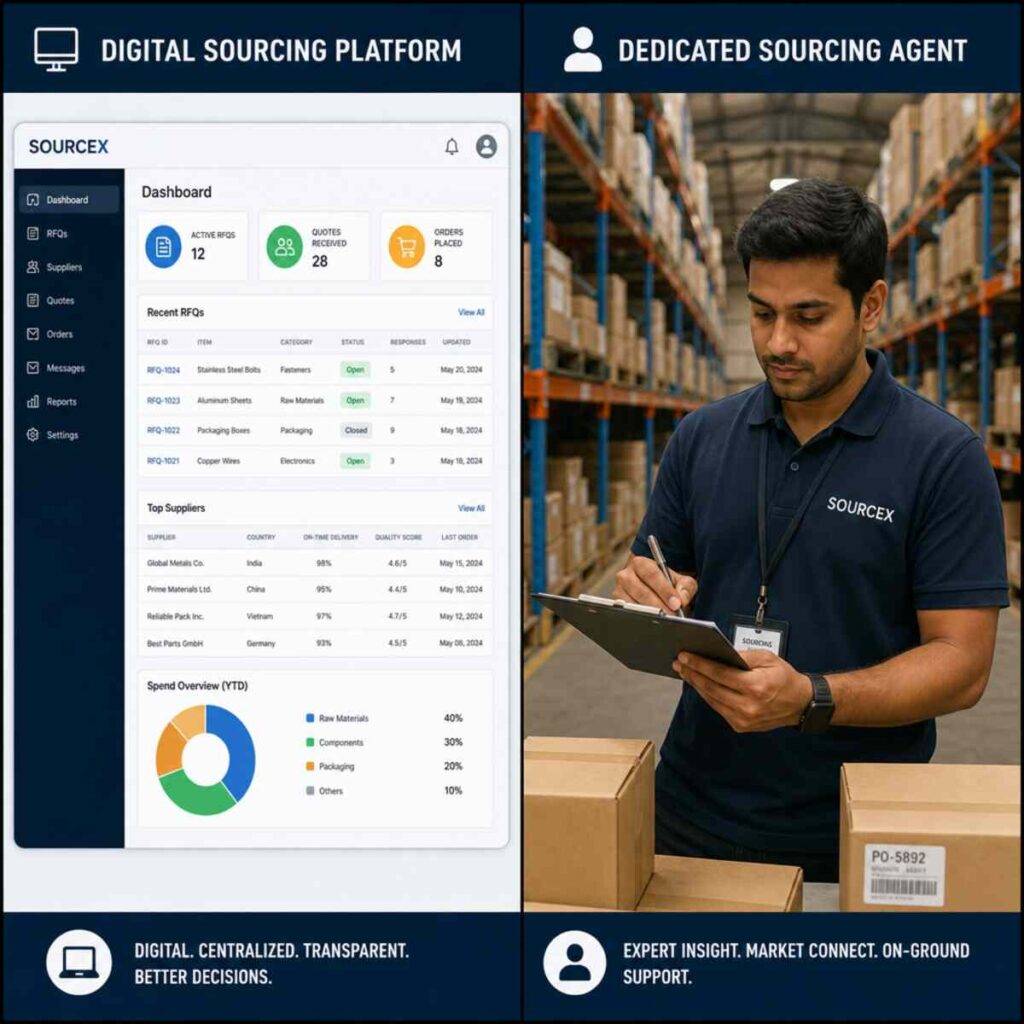
Platforms like AutoDS, CJ Dropshipping, and Spocket are sourcing platforms. They offer a user-friendly app, automated integrations, and a massive catalog of products. They are convenient, but you are still a small fish in a massive pond, and you are paying platform fees or marked-up product prices.
What is a Sourcing Agent?
A sourcing agent is an individual or a company based in China that acts as your personal representative. You say, “I want to sell this specific dog bed.” The agent visits factories, negotiates the best price, purchases the inventory, stores it in their warehouse, and ships it directly to your customers.
When comparing sourcing agents versus sourcing platforms, the agent almost always wins on price and customization once you have volume. Agents can source custom packaging, perform rigorous quality checks, and provide you with daily invoice spreadsheets. However, reputable agents usually require a minimum order volume (e.g., 20-30 consistent daily orders) before they will work with you.
Mastering Logistics: Shipping and Fulfillment
The Achilles heel of dropshipping has always been shipping times. Modern consumers, conditioned by Amazon Prime, expect their goods in 2 to 3 days. While hitting 2-day shipping from China is nearly impossible without local warehousing, you can absolutely achieve 6 to 10-day shipping.
Fastest Shipping Methods from China
To achieve reliable shipping, you must move away from state-run postal services (like China Post or the now-outdated ePacket) and utilize private courier lines. The fastest shipping methods from China involve direct flight freight forwarding.
- YunExpress: Widely considered the gold standard for dropshippers. YunExpress collects packages from Chinese factories, flies them directly to destination countries (such as the US or the UK), clears customs in bulk, and hands them off to local couriers (such as USPS or Royal Mail) for the final mile. Delivery usually takes 6-10 days.
- Yanwen: Similar to YunExpress, Yanwen offers “Special Line” shipping that bypasses traditional postal delays. It is highly reliable for North America and Europe.
- 4PX: A massive logistics company partly backed by Alibaba. They offer excellent rates for lightweight packets and fast transit times globally.
- CNE Express: Another top-tier private line that specializes in fast transit to European countries.
Reducing Long Delivery Times from Overseas
If 6-10 days is still too long for your target market, you must alter your fulfillment strategy. The most effective way of reducing long delivery times from overseas is by bulk-purchasing inventory and utilizing local fulfillment centers.
Many modern dropshipping services offer automated order fulfillment China warehouses, but the top-tier ones also own warehouses in Los Angeles, New Jersey, Frankfurt, and London.
The Strategy:
- Test the product using fast shipping lines from China (YunExpress).
- Once you find a winning product that generates consistent daily sales, negotiate wholesale pricing on Chinese marketplaces.
- Buy 500 units upfront.
- Have your supplier ship those 500 units via sea freight (which takes 30-40 days but is incredibly cheap) to a 3PL (Third Party Logistics) warehouse in your target country.
- Fulfill orders locally in 2-4 days.
This hybrid model—dropshipping to test, bulk buying to scale—is how 7-figure e-commerce brands are built.
Tracking International Packages from China
Customer anxiety is the leading cause of chargebacks and angry support emails. When a customer sees a tracking update in Chinese, they panic. Therefore, effective tracking international packages from China is a vital customer service tool.
Do not send your customers raw tracking links from Chinese carriers. Instead, use universal tracking software that translates and standardizes tracking events.
- 17TRACK: The industry standard for global package tracking. It automatically detects the carrier and translates tracking updates into the user’s local language.
- AfterShip: A premium app that integrates with Shopify. It creates a branded tracking page on your website, keeping customers in your ecosystem and enabling you to upsell them as they check their package status.
Technology and Integration: Automating Your Store
Running a high-volume dropshipping store manually is a recipe for burnout. You need software to sync inventory, update tracking numbers, and process payments automatically.
Shopify Apps for Chinese Supplier Integration
If you are using Shopify, the App Store is filled with tools designed to make your life easier. Here are the top Shopify apps for Chinese supplier integration:
- DSers: The official AliExpress dropshipping partner. It replaces Oberlo and lets you place hundreds of orders with a single click, map variants to different suppliers, and automatically sync tracking numbers to your Shopify dashboard.
- AutoDS: A robust all-in-one platform that not only connects to AliExpress and CJ Dropshipping but also monitors supplier stock levels and prices, automatically updating your store to prevent you from selling out-of-stock items.
- Zendrop: Created by dropshippers, for dropshippers. Zendrop bypasses AliExpress entirely, sourcing products directly from factories and offering incredibly fast shipping lines and custom branding options.
- CJ Dropshipping App: The official app connects your store directly to their fulfillment network. When an order drops in your store, it is instantly routed to a CJ warehouse for picking and packing.
Elevating Your Brand: Quality Control and Private Labeling
The biggest criticism of the dropshipping model is that it creates stores with no real brand identity—just generic products shipped in yellow ePacket envelopes. If you want to build a sustainable business that you can eventually sell, you must focus on brand equity.
Quality Control for China Imports
When you do not physically touch the products you sell, ensuring quality is terrifying. One bad batch from a factory can result in hundreds of refund requests and get your payment gateways (like Stripe or PayPal) shut down. Implementing strict quality control for imports from China is mandatory.
- Order Samples: Never scale a product without holding it in your hands first. Order a sample from 3 different suppliers. Test the durability, inspect the packaging, and evaluate the shipping speed.
- Hire Third-Party Inspection Agencies: If you are transitioning to bulk orders, spend $100-$300 to hire an agency like V-Trust or QIMA. They will send an inspector to the Chinese factory before the goods are shipped to ensure the product matches your specifications.
- Agent Video Checks: If you are using a private sourcing agent, require them to send you a video of them unboxing and testing the product before they fulfill the first batch of customer orders.
White Label Dropshipping Suppliers China
Once your product is validated, the next step is white labeling. This means taking a generic product and slapping your brand’s logo on it, along with custom packaging.
Finding white label dropshipping suppliers China is easier than ever. Many agents and platforms (like CJ Dropshipping or Alibaba suppliers) offer this service for a minimal fee.
Steps to White Labeling:
- Custom Mailer Bags: Instead of a generic gray poly mailer, pay an extra $0.10 per order for a sleek black mailer with your logo.
- Thank You Cards: Include a beautifully designed insert card with a discount code for their next purchase. This massively increases customer retention.
- Product Engraving/Printing: Work with your supplier to laser engrave or screen-print your logo directly onto the product. This usually requires a small MOQ (e.g., 100-200 units) but instantly elevates the perceived value of your item, allowing you to charge higher retail prices.
Navigating Tariffs, Taxes, and Legalities
When dropshipping from China, you are acting as an importer of record, which means you must have a basic understanding of international trade laws. While you should always consult a tax professional, here are the basics every dropshipper should know:
Customs and Import Duties
Most dropshipping parcels fall under the “de minimis” threshold. This is a valuation threshold below which goods can be imported free of duty and taxes.
- In the United States, the de minimis value is currently $800. Since most dropshipped orders are well below this value, they enter the US without triggering import taxes for your customers.
- In the European Union, the rules have changed. The IOSS (Import One-Stop Shop) system requires VAT (Value Added Tax) to be collected at the point of sale for goods entering the EU. Platforms like AliExpress and Shopify have integrated IOSS settings to help you collect and remit this tax automatically, preventing your customers from being hit with surprise customs fees at their door.
Intellectual Property (IP) Risks
Chinese marketplaces are notorious for copyright and trademark infringement. Dropshipping items featuring Disney characters, Marvel logos, or replica Nike shoes will get your store shut down and could lead to massive lawsuits.
- Stick to unbranded, generic utility items.
- If a product has a brand name on it that you do not recognize, Google it. Make sure it is not a patented design owned by a Western company.
Scaling Up: Building a Sustainable E-Commerce Machine
Once you have chosen the best chinese dropshipping site for your needs, found a reliable supplier, and set up your automated software, it is time to scale. Scaling isn’t just about spending more money on Facebook and TikTok ads; it is about fortifying your backend operations.
1. Optimize Your Cash Flow
Dropshipping is cash-flow intensive. When a customer pays you via Stripe or Shopify Payments, it can take 2 to 5 days for those funds to hit your bank account. However, you must pay your Chinese wholesale suppliers immediately to get the order shipped. You need a buffer of capital or a high-limit business credit card to float inventory costs while you wait for payouts.
2. Diversify Your Supply Chain
Never rely on a single factory. If your winning product is manufactured by only one supplier and their factory shuts down for a power outage or a localized lockdown, your business grinds to a halt. Always have a vetted backup supplier ready to go.
3. Plan for the Chinese New Year (CNY)
Every February, China’s manufacturing and logistics infrastructure shuts down for 2 to 4 weeks to celebrate the Lunar New Year. If you do not plan for this, your store will die.
- The Fix: Work with your automated order fulfillment China warehouses to pre-purchase a month’s worth of inventory in December. Have them ship it to a local US/EU warehouse so you can continue fulfilling orders without interruption while your competitors are forced to turn off their ads.
Making the Final Decision: Which Platform Wins?
So, returning to our original question: What is the Best Chinese Dropshipping Site for Drop Shipping from China?
The reality is that your choice of platform should evolve as your business grows.
- Phase 1 (The Beginner): If you are just starting, have zero capital, and want to test the waters, AliExpress remains the best starting point. Its vast catalogue and ease of use via Shopify apps make it the perfect sandbox.
- Phase 2 (The Intermediate): Once you are generating 5 to 10 sales a day, you must abandon AliExpress to avoid shipping complaints. Migrate to CJ Dropshipping or Zendrop to utilize faster shipping lines and consolidate your orders.
- Phase 3 (The Pro): When you are moving 50+ units a day, public platforms eat into your profit margins. This is when you hire a private Sourcing Agent to buy directly from 1688, secure true bottom-dollar pricing, and implement robust white-labeling and custom packaging.
- Phase 4 (The Brand): At 100+ units a day, you are no longer truly dropshipping. You are negotiating with factories on Alibaba, buying in bulk, and shipping via sea freight to a 3PL in your target country for 2-day domestic delivery.
Conclusion
Dropshipping from China is not a get-rich-quick scheme; it is a highly logistical e-commerce business model that requires patience, research, and relationship-building. By understanding the nuances of chinese wholesale suppliers, leveraging fast private shipping lines, and utilizing modern integration tools, you can bypass the common pitfalls that cause most beginners to fail.
The landscape of global trade is shifting, and the tools available to independent entrepreneurs are more powerful than ever before. Do not let the fear of long shipping times or language barriers stop you. Start by exploring the platforms we’ve discussed, ordering some samples, testing your marketing, and building a brand that stands the test of time. Your e-commerce empire starts with a single order—make sure you have the right supplier to fulfill it.
