

Have you ever tried to watch a video online, only to be met with the frustrating message: “This content is not available in your country”? It’s a common experience that feels like hitting a digital wall. But what if there was a simple digital key that could unlock that content for you? There is, and it involves something called a proxy server. Select the best proxies for google ads.
In practice, a proxy server in Chrome acts as an intermediary for your internet traffic. Imagine a mail forwarding service in another country; it receives a package for you locally and then sends it to you. To the original store, it looks like the purchase never left its home country. A proxy works the same way, fetching websites on your behalf so the site sees the proxy’s location, not your real one.
This isn’t a guide for network engineers. It’s a straightforward walkthrough for everyday Chrome users who want a simple solution for a more open and private internet experience. Whether you want to access a different country’s streaming library or enable more anonymous browsing with a proxy in Chrome on public Wi-Fi, this is an achievable skill.
This guide will walk you through:
- What a proxy server is (in plain English)
- The step-by-step process to set one up directly in Chrome
- The key difference between a Chrome VPN proxy and a standard proxy
- How to avoid common risks and choose a trustworthy option
What is a Proxy Server? Your Personal Shopper for the Internet
Every time you go online, your computer uses a unique label to communicate with websites called an IP address. It acts just like a digital street address, telling every website you visit where to send back the information you requested. But just like a physical address, your IP address also gives away your general location, such as your city and country.
This is where a proxy server comes in. Imagine you want to order something from a store that only ships within Japan. You could use a mail-forwarding service in Tokyo. You tell the service what you want, they go to the store and buy it for you, and then they ship it to your home. To the store, it looks like a normal domestic purchase; it never sees your real, international address.
A proxy server is your personal mail forwarder for the internet. Instead of connecting directly to a website, your Chrome browser connects to the proxy first. The proxy then fetches the webpage on your behalf and sends it back to you. As a result, the website only sees the proxy server’s IP address—perhaps one in London, Tokyo, or New York—and not your own. Your digital address stays hidden from view, providing a basic layer for anonymous browsing.
By “borrowing” another computer’s IP address, you can make it appear as if you’re browsing from a different part of the world. This simple act of rerouting your connection unlocks some very practical advantages.
The 3 Main Reasons to Use a Proxy in Chrome
Routing your browsing through another computer gives you more control over your digital identity and access to information. It’s a simple trick with some powerful, real-world advantages. From unlocking entertainment to adding a layer of privacy, here are the main benefits of using a Chrome proxy.
- Access Content From Around the World Many websites use geo-restriction to limit access based on your location. With a proxy server located in the right country—say, the UK—you can bypass geo-restrictions with Chrome. The streaming site sees the proxy’s UK address, thinks you’re a local, and happily sends the video over.
- Add a Layer of Privacy on Public Wi-Fi Using the free Wi-Fi at a café or airport is convenient, but it can be risky. Since a proxy hides your real IP address, it adds a helpful privacy shield between you and the websites you visit, making anonymous browsing with a proxy in Chrome on public networks a bit safer.
- Get Around Website Blocks at School or Work Many school and office networks use network blocks to restrict access to sites like social media or gaming platforms. By connecting to a proxy, the network often only sees that you’re talking to the proxy server, not the blocked website itself. This can be an effective way to get past those digital walls.
Ultimately, these benefits of using a Chrome proxy are about making the internet more open and private for you. Now that you understand the powerful “why,” let’s walk through the “how.”
How to Manually Set Up a Proxy in Chrome (The Built-in Way)
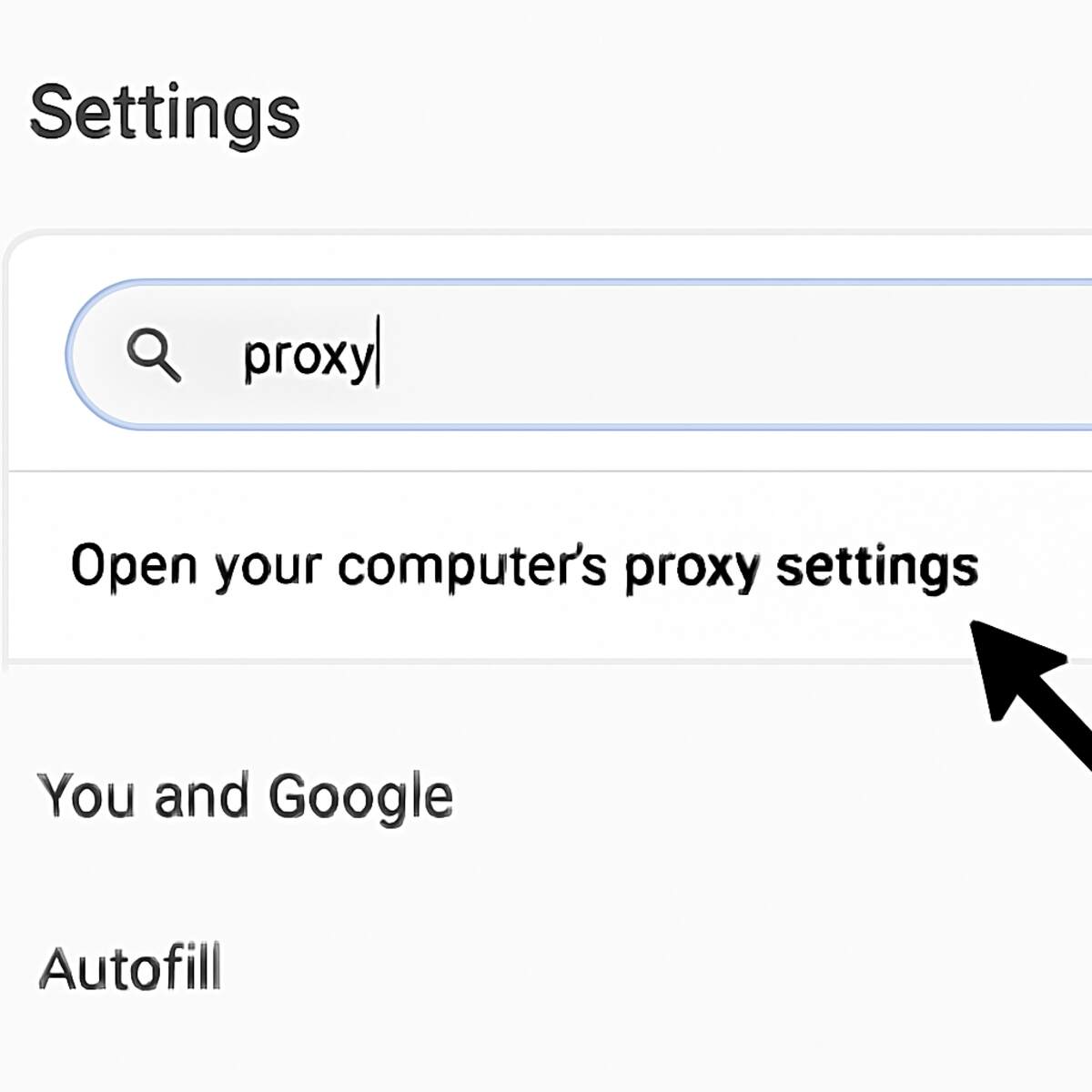
Finding the right menu is the first step. To manually set up a proxy for Chrome, open your browser’s settings, click the search bar at the top, and type the word “proxy.” This single action points you exactly where you need to go.
When you search, Chrome gives you one primary button: “Open your computer’s proxy settings.” This is a crucial piece of the puzzle. It reveals that Chrome doesn’t have its own, separate proxy controls; it “borrows” the main internet settings from your computer’s operating system, whether that’s Windows or macOS. Clicking this button will take you out of Chrome and into your system’s network configuration panel.
By changing the setting at the computer level, you ensure that most of your computer’s internet traffic gets routed through the proxy, not just what you do in Chrome. This system-wide approach is how you effectively configure proxy settings in Chrome and other applications all at once.
After clicking that button, you’ll be looking at a new window with options for your internet connection. The next step is simply telling your computer which proxy server to use.
Configuring Your Proxy: What to Paste and Where
Once you arrive at your computer’s network settings page, you’ll see a few empty fields. To get your digital “mail forwarder” working, you only need to provide two key pieces of information: an Address and a Port Number. Your computer needs to know exactly which server to connect to out of the millions that exist on the internet.
The Proxy Address is like the street address of the forwarding company’s warehouse. It’s a unique identifier, often a series of numbers (like 198.51.100.1) or a web-like address (like proxy.provider.com). The Port Number is like the specific loading dock number at that warehouse. It tells your computer not just which server to go to, but which “door” on that server to use for its requests. A single server might use Port 80 for regular web traffic and Port 8080 for a special proxy service. Both details are required to make a successful connection.
These details are provided to you by a proxy service. Whether you use a free service or subscribe to a paid one, the provider will give you a list of addresses and their corresponding port numbers. The process is simple: you copy the address and port from your provider and paste them directly into these two fields. This is the essence of how you manually set up a proxy for Chrome.
With the details entered, the final action is to flip the switch to “On.” Your computer, and by extension your Chrome browser, will now send its internet requests to the proxy server first. Before you rush to grab the first free proxy you can find, there’s a critical warning you need to hear.
The Big Warning: The Hidden Dangers of ‘Free’ Public Proxies
After learning how to plug in a proxy address, the temptation to search for a free one is strong. However, using a random, public proxy from an unknown source is like handing your house keys and your mail to a stranger and just hoping for the best.
A dishonest mail forwarder could open your packages, read your private letters, and even slip dangerous items inside before sending them on. This is precisely what happens with untrustworthy free proxies. Since all your web traffic passes through their servers, they can easily engage in data logging, secretly recording every site you visit. Some even practice malware injection, inserting malicious software or invasive ads directly onto the otherwise legitimate web pages you are viewing.
Why would anyone offer this powerful service for free? The answer is simple: if you aren’t paying for the product, you are the product. Running servers costs money, and these “free” providers often cover their expenses by selling the valuable data they’ve logged from your browsing sessions. Your online habits and personal information become a commodity. These are the fundamental risks of using a public chrome proxy.
The safe alternative is to use a service from a reputable provider with a clear business model and a transparent privacy policy. For people debating the security of a chrome proxy vs vpn, or searching for the best free proxy extension for chrome, the answer always starts with trust.
The Easiest Method: Using a Chrome Proxy Extension
Manually copying and pasting proxy addresses is a chore, and it’s easy to forget to turn it off. A far more user-friendly solution is a chrome proxy extension. Think of it like a mini-app that adds a simple on/off switch for your proxy, usually right next to your address bar.
This convenience is the main reason millions of people use them. Instead of digging through menus, you can activate your proxy with a single click. Want to check out that UK-only video? Just click the extension’s icon, select a server in the United Kingdom from a simple list, and your browser instantly appears to be there. This on-the-fly switching capability is a major feature highlighted in any good chrome proxy switcher extension review.
However, it’s wise to be cautious. The key to safety is choosing an extension from a well-known, reputable company. The best free proxy extension for chrome is almost always a free, limited version offered by a major VPN provider. These companies have a transparent business model—they hope you’ll enjoy the free service and eventually upgrade to their paid plan. Their reputation depends on keeping you safe.
Getting started is straightforward. You simply visit the official Chrome Web Store, search for a well-regarded proxy or VPN extension, and click the “Add to Chrome” button.
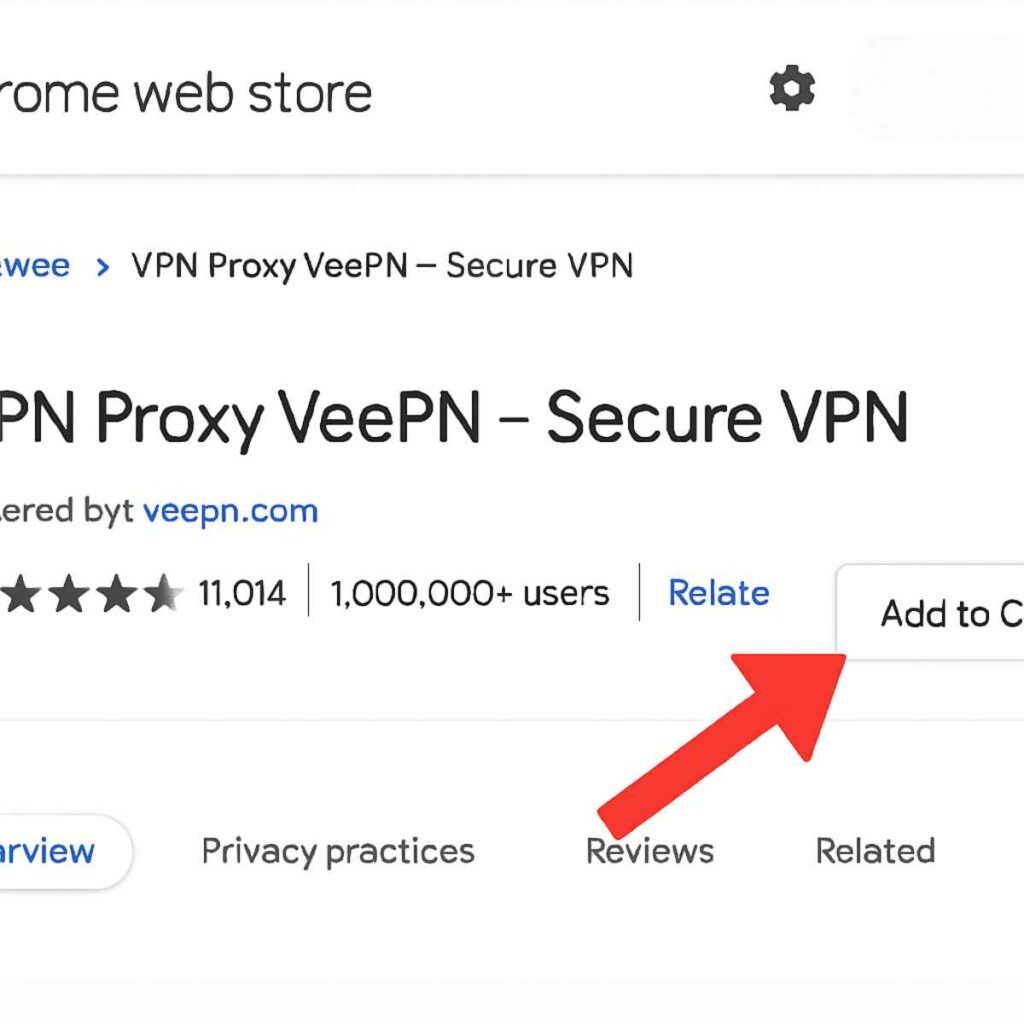
Once installed, you’ll have an easy-to-use icon ready for action. You’ll quickly notice that many of the best extensions are offered by companies that also sell something called a VPN, which raises the question: what’s the real difference, and which one is right for you?
Chrome Proxy vs. VPN: What’s the Real Difference?
The choice in the chrome proxy vs vpn debate comes down to one question: do you need to change your location for just one app, or do you need to secure your entire device? A proxy is like a detour for a single application—in this case, your Chrome browser. When it’s on, only the traffic from Chrome goes through the intermediary server.
The second, and arguably more important, difference is security. This is where the concept of encryption comes in. Think of encryption as sending a message in a locked, armored truck. Only you have the key to write the message, and only the recipient has the key to read it. A VPN (Virtual Private Network) is designed to put all your internet traffic—from every app—inside that armored truck. Most free or basic proxy servers don’t do this; they’re more like sending a postcard that anyone along the route can read.
This distinction is critical on public Wi-Fi. If you use a simple proxy server in Chrome, a savvy snooper on that same public network could still potentially see what you’re doing in other apps. However, with a chrome vpn proxy extension that provides true VPN-level encryption, your connection is completely scrambled. All your data becomes unreadable nonsense to prying eyes.
A simple rule of thumb: use a proxy for temporary, low-risk tasks, like accessing a region-locked video. It’s a tool for access. Use a VPN when your priority is privacy and security. A VPN is the superior choice for security.
Understanding Proxy Types: Residential, Datacenter, and SOCKS5
The effectiveness of a proxy often comes down to where its IP address originates. Websites have become incredibly smart at spotting these addresses, and the type you use can be the difference between seamless access and a frustrating block. The two most common types you’ll encounter are datacenter and residential proxies.
The vast majority of proxies, especially free ones, are datacenter proxies. Their IP addresses belong to massive, commercial data centers. While fast and cheap, major websites know these addresses and can easily flag traffic from them as suspicious.
In contrast, a residential proxy uses an IP address that belongs to a real home, assigned by a regular Internet Service Provider (like Comcast or AT&T). When you’re using a residential proxy with Chrome, the website you visit sees your request as coming from an authentic home computer. This makes your connection appear far more legitimate and dramatically reduces the chance of being blocked.
Beyond the source, you might see terms like HTTP or SOCKS5 when setting up a proxy server in Chrome. This refers to the type of traffic the proxy can handle. An HTTP proxy is designed only for web pages. A SOCKS5 proxy is more versatile; it can handle not just web traffic, but also data from other applications like games or video streaming apps. A simple SOCKS5 proxy chrome configuration gives you a more flexible tool.
Seeing “Proxy Connection Failed”? 3 Quick Fixes to Try
You’ve carefully pasted in the server address and port number, hit save, and eagerly tried to load a website—only to be met with a chrome proxy connection failed error. It’s a frustrating but common roadblock. The fix is usually one of three simple things.
- Check for Typos: A single mistyped character in the server address or port number is the number one culprit. Double-check that every letter, number, and period is exactly as your proxy provider gave it to you.
- Check if the Proxy is Active: The server you are trying to use might be temporarily offline or overloaded. If your provider gave you a list of servers, simply try pasting in the details for a different one.
- Check Your Firewall: Your computer’s firewall (or antivirus software) acts as a digital security guard and might block the proxy’s unfamiliar connection by mistake. Try briefly turning your firewall off to see if the connection works. If it does, you can then add an exception for the proxy in your firewall’s settings.
How to Check if Your Chrome Proxy Is Actually Working
So, the error message is gone and websites are loading. But how can you be certain the proxy is actually hiding your location? The goal of using a proxy server in Chrome is to make websites see the proxy’s IP address, not yours. Verifying this is simple.
The most reliable way to check your proxy IP in Chrome is a quick, two-step test. First, with your proxy turned off, go to Google and search for “what is my IP address.” The search results will show you your current IP and a location—that’s your real digital address. Now, turn your proxy on, open a new browser tab, and perform the same search.
If the IP address and location shown are now different from your original one, it’s working perfectly! The website (in this case, Google) now sees the proxy’s address instead of yours, confirming that your traffic is being routed correctly.
How to Quickly Disable Proxy Settings in Chrome
While a proxy is a great tool, you won’t want to leave it on all the time. Your normal internet connection is usually faster. Leaving a misconfigured proxy active is a common cause of the “proxy server is refusing connections” or ERR_PROXY_CONNECTION_FAILED error. Thankfully, knowing how to disable the proxy in Chrome is as simple as retracing your steps.
Just return to the exact same system menu where you enabled it and toggle the switch back to its “Off” position. The moment you disable it, your internet traffic goes back to its normal, direct route. If this feels clunky, a proxy browser extension often allows you to enable or disable the proxy with a single click from your browser toolbar.
Your Next Step: Browsing Smarter and Safer in Chrome
You are now equipped with a powerful understanding of proxy servers, recognizing them as tools to change your digital location. This clarity is crucial for making smart decisions about your online privacy and access.
A proxy is your quick location-shifter, perfect for a one-off task like watching a region-locked video. A VPN is your private, armored car for the internet, encrypting all your activity to provide serious security, especially on public Wi-Fi. One is for access, the other is for armor.
With this knowledge, you can move forward safely. Instead of blindly searching for the best free proxy extension for chrome and risking your data, use this framework to make an intelligent choice.
Your 3-Step Plan for Smarter Browsing:
- Define Your Goal: Do you need simple access to one site (a proxy might work), or do you need comprehensive privacy and security (choose a VPN)?
- Choose a Trusted Tool: Steer clear of random “free” proxy lists. For reliable performance, opt for a reputable paid proxy provider or a highly-rated VPN service.
- Always Test: Once you’re connected, visit an “IP checker” website to confirm your digital location has changed before you proceed.
Understanding how proxies work isn’t about becoming a tech whiz; it’s about becoming a more capable internet user. You now have the insight to choose the right tool for the job, allowing you to navigate the web with more freedom, confidence, and security.
